When Awards Legitimize the Wrong Thing
My thoughts on the Golden Globes podcast category.

When the Golden Globes announced they were introducing a podcast category, the audio community felt a genuine jolt of excitement. It felt like a long-overdue signal that podcasting, especially narrative, craft-driven audio, was finally being recognized as an art form, not just a distribution channel.
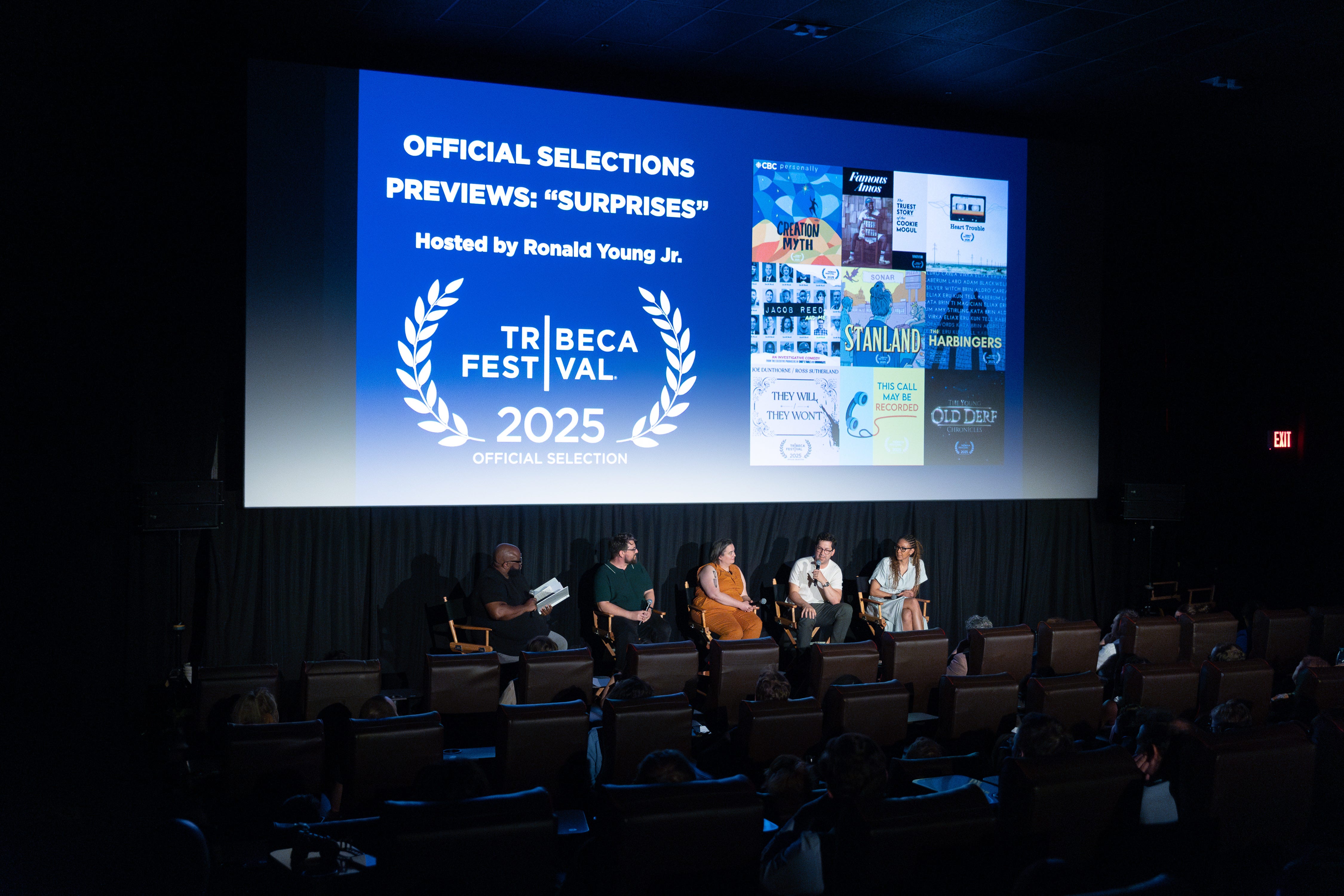
I was personally excited because Tribeca had been floated as a potential qualification pipeline, much like film festivals are for movies and documentaries. My own podcast project, Jacob Reed and Me, was a Tribeca selection last year. The idea that festivals and peer recognition could play a role in award legitimacy felt aligned with how creative industries are supposed to work.
That’s not what happened.
Instead, the Golden Globes partnered with third-party podcast research firm Luminate to release a list of 25 qualifying shows. The criteria appeared to prioritize scale, revenue, reach, and engagement over craft, originality, or contribution to the medium, resulting in a slate dominated by enormous, celebrity-led projects.
What complicates this further is that Jay Penske holds a stake in both the Golden Globes and Luminate, as well as in major trade publications, including Variety. While not inherently improper, the overlap raises reasonable questions raised by Glenn Whipp in his LA Times article last week, about how legitimacy, visibility, and success are being defined, and by whom, at a moment when the medium itself is still fighting for recognition based on craft rather than commercial power.
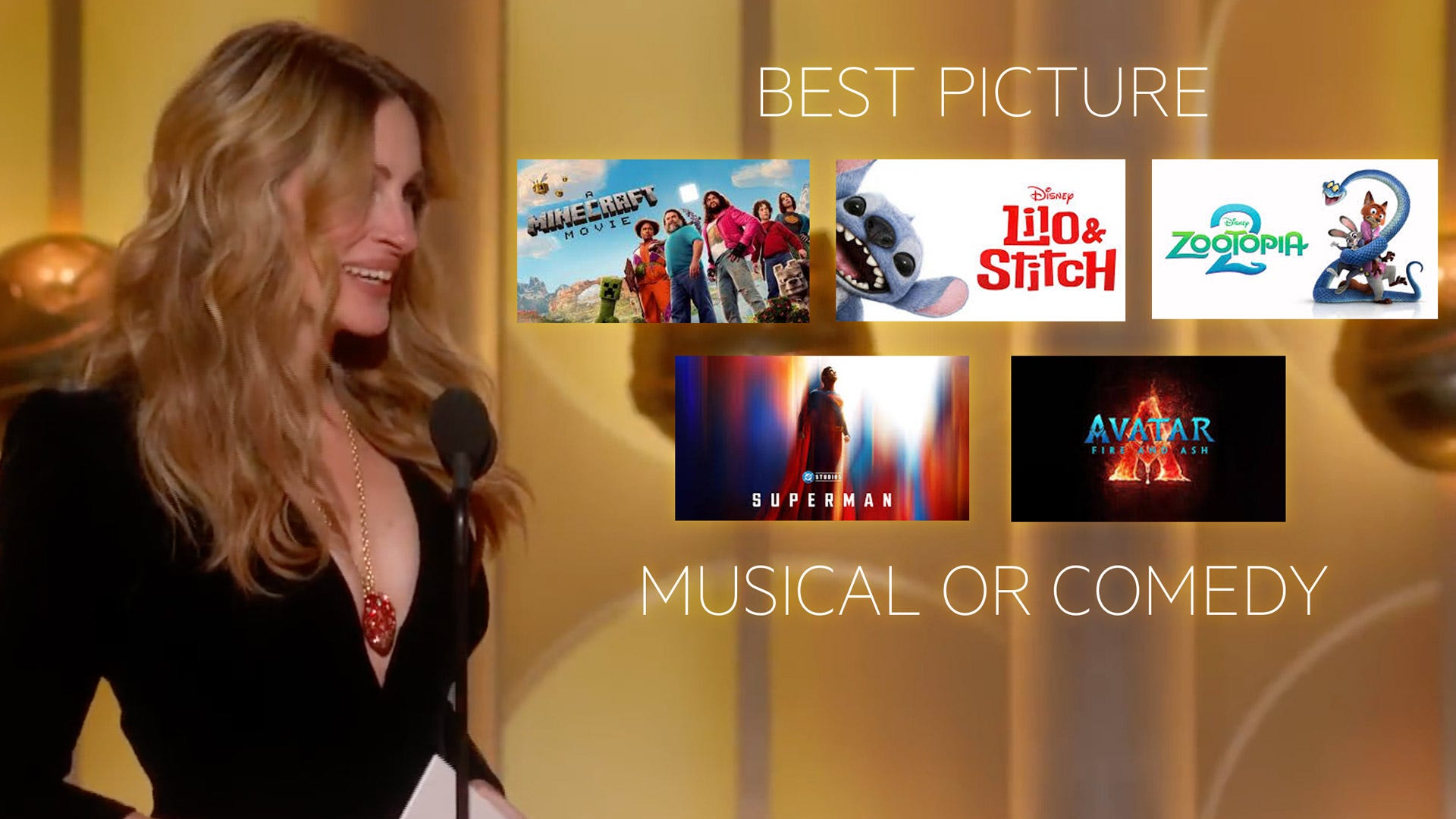
Whether or not this approach is motivated by nefarious intent, it runs counter to the stated spirit of awards like the Golden Globes or the Oscars, which historically exist to recognize artistic achievement, not commercial dominance. Imagine if the Golden Globes only considered box office returns, rather than peer evaluation, innovation, or storytelling excellence. Rather than Blue Moon, Bugonia, Marty Supreme, No Other Choice, and One Battle After Another, we’d be looking at A Minecraft Movie, Lilo & Stitch, Zootopia 2, Superman, and Avatar: Fire and Ash as the ‘Best Picture — Musical or Comedy’ nominees.
That’s effectively what happened here.
Interestingly, even when only looking at engagement and eyeballs, rather than artistry, the top 25 contenders list looked like this:
Contenders:
20/20 (ABC News)
48 Hours (CBS News)
Armchair Expert with Dax Shepard
Call Her Daddy
Candace
Crime Junkie
Dateline NBC
Good Hang with Amy Poehler
Morbid
MrBallen Podcast: Strange, Dark & Mysterious Stories
Pardon My Take
Pod Save America
Rotten Mango
Shawn Ryan Show
SmartLess
Stuff You Should Know
The Ben Shapiro Show
The Bill Simmons Podcast
The Daily (The New York Times)
The Joe Rogan Experience
The Megyn Kelly Show
The Mel Robbins Podcast
The Tucker Carlson Show
This Past Weekend w/ Theo Von
Up First from NPR
When the nominees were announced, nearly all were large, celebrity-fronted talk shows, with Up First the lone exception rooted in journalistic rigor. And while most podcasts are technically talk shows, the medium is in the middle of a structural shift that complicates this further.
Nominees:
Armchair Expert With Dax Shepard
Call Her Daddy
Good Hang With Amy Poehler
The Mel Robbins Podcast
Smartless
Up First (NPR)
“We always knew the Globes wanted to pack the room with celebrities for the telecast,” revealed a longtime CNN producer (who did not wish to be named) in a private audio message board. “It meant their choices/nominees were not always best in the category, but definitely A-listers. It would seem their podcast category is following suit with what has been a long-standing practice.”
As podcasting pivots aggressively toward video, studios like Netflix and Amazon are realizing what many already know: podcast formats are cheap, efficient ways to produce video content at scale. Podcasting was born from scrappiness, a low barrier to entry compared to shooting a TV pilot or short. But when those same formats are now filmed with three-camera setups, professionally produced, and hosted by A-list actors (who are also members of SAG-AFTRA), the economics and ethics change.
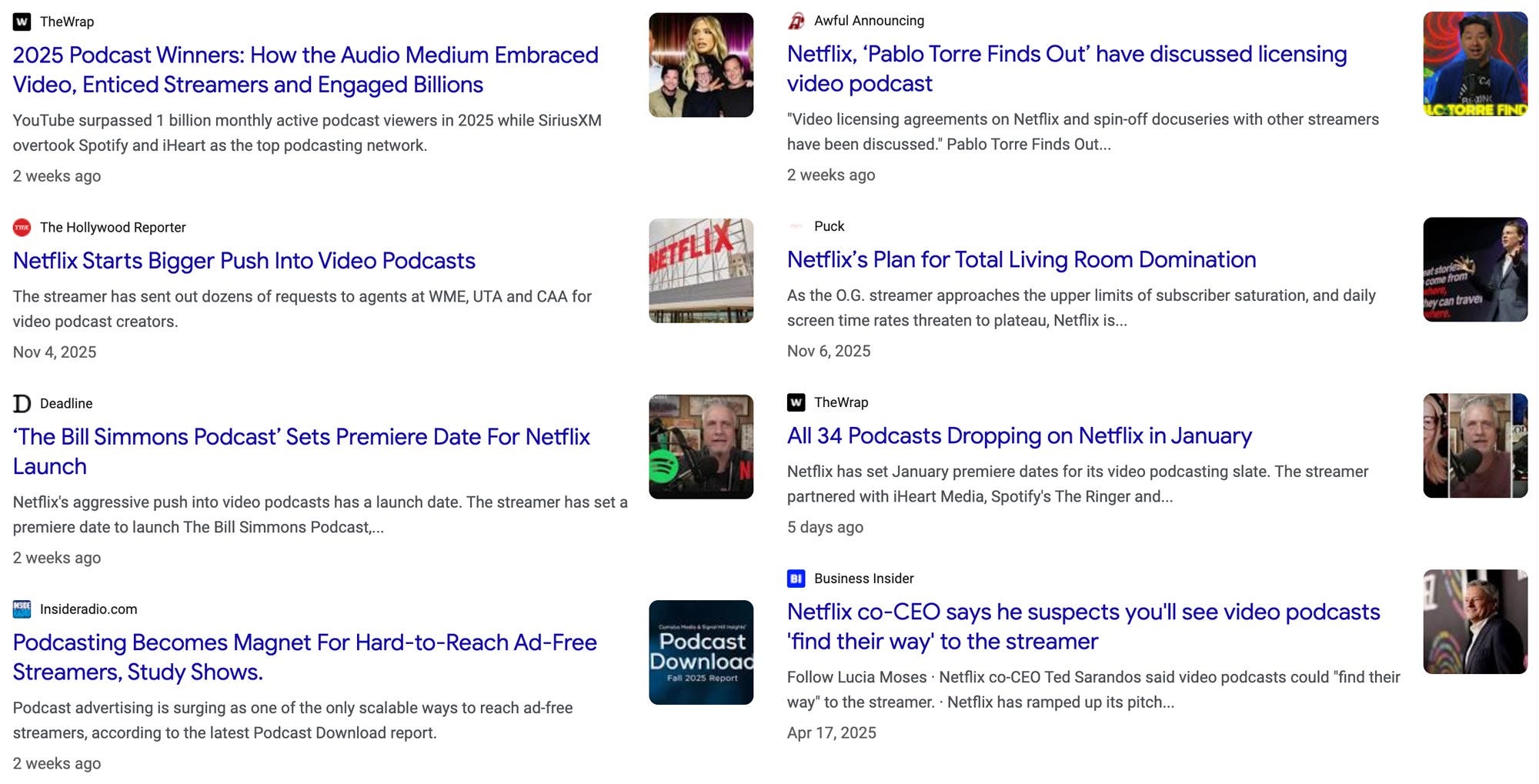
What we’re seeing is the rise of effectively non-union talk shows masquerading as podcasts. They’re shot like traditional television, distributed as audio and video, and monetized at scale, without the labor protections that would apply if they were formally classified as talk shows. And yet, there’s been little outcry from the unions that exist specifically to protect creative labor.
That tension matters. These productions pull attention and audiences away from narrative journalism, independent audio storytelling, and experimental formats—while using celebrity power to legitimize a parallel, non-union ecosystem. It’s a structural loophole, not a creative evolution.
If you’re going to legitimize podcasting to the extent of creating a Golden Globe category, why not recognize the shows that actually built the medium? Where are Radiolab, 99% Invisible, Heavyweight, Decoder Ring, This American Life, The Moth? Or, heck, if you really want to spotlight talk shows, why not nominate WTF with Marc Maron, as it wraps up a 16-year run that arguably influenced the viability of a talk podcast in the first place? Many of the creators behind these shows have spent nearly two decades growing audio into what it is today, only to watch profit-driven entrants swoop in and reap institutional recognition.
The uncomfortable truth is that there are very few premium narrative audio shows today that didn’t originate over a decade ago, when the industry operated under completely different economic conditions. The exceptions tend to be spin-offs from already successful franchises, not risky new bets. That should worry anyone who cares about the future of the medium.
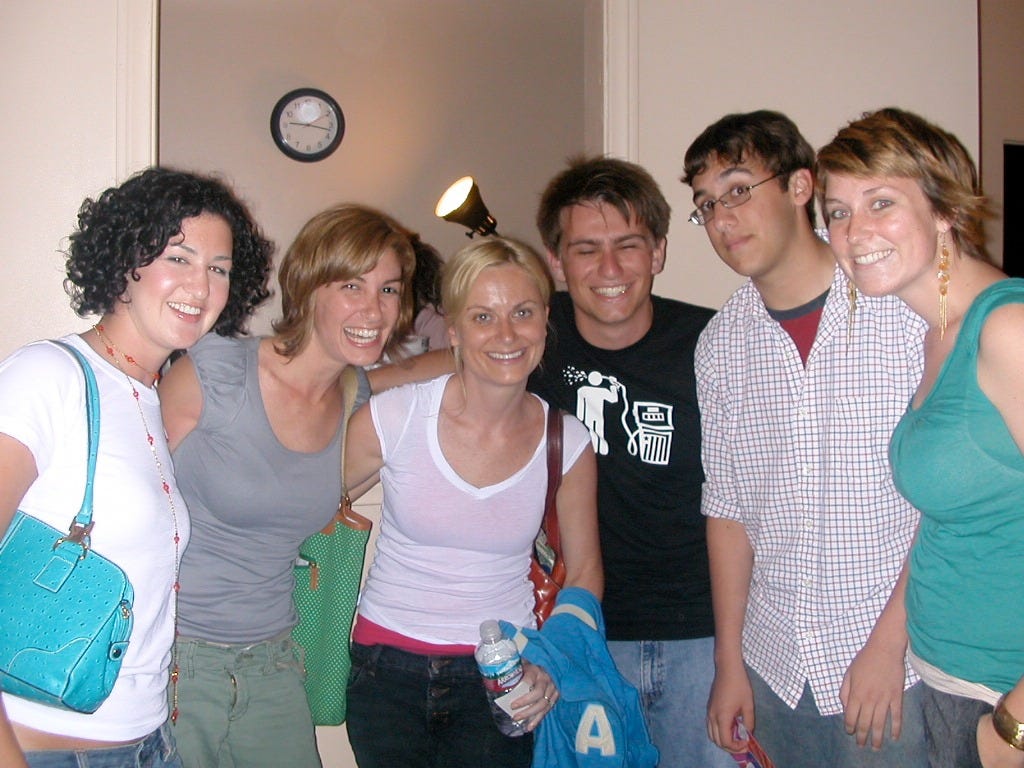
To be clear: this isn’t about begrudging celebrities their success. IMO, Amy Poehler should host any show she wants. She’s genuinely both an incredible talent and human, and anyone who’s spent time around the UCB community knows how deeply she uplifts others.
“While I think Good Hang is a good show, it’s unsurprising that this category would go to someone who has a good relationship with the HFPA, and has hosted the Globes three times.” Wrote Ronald Young Jr., who hosted the Tribeca panel I spoke on and was named Vulture Mag’s Podcaster to watch 2023. “It’s an easy headline for all parties involved, and they still get to have a celebrity face in the category.”
He’s right. It keeps a celebrity face front and center. And it avoids asking harder questions about craft, labor, and who we choose to reward.
If we want high-quality, narrative-driven audio to survive…if we want podcasts that aren’t just celebrity chat shows with cameras, we have to reward them for existing. Awards matter. Recognition matters. What institutions choose to legitimize shapes what gets funded, what gets made, and what comes next.
And right now, the signal being sent is a troubling one.